 By Leo Macapagal, PTRP
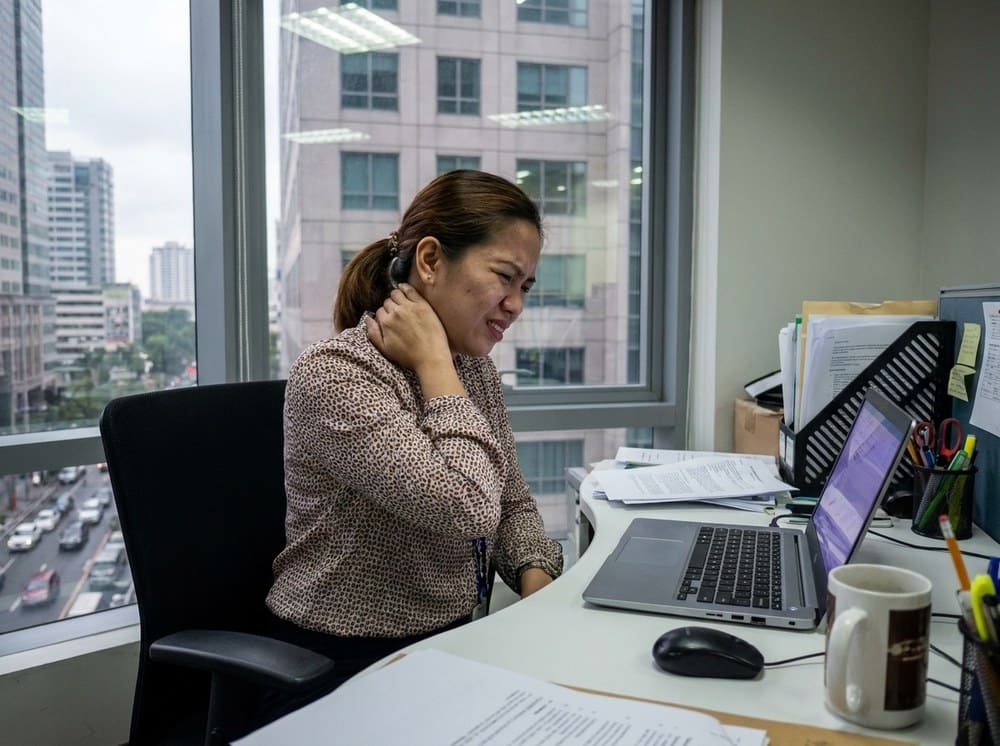
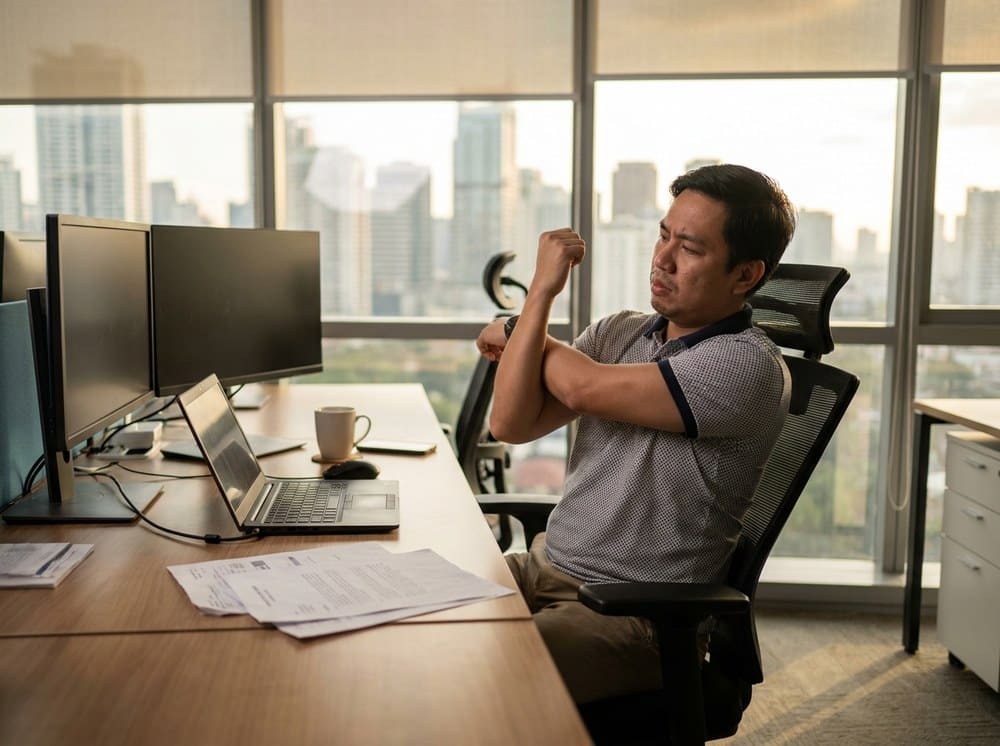
Ask any physiotherapist in Metro Manila what the number one complaint is, and they will tell you the same thing: mababang likod — lower back pain. We see it in 22-year-old BPO agents and 58-year-old executives, and while the personal stories differ, the pattern underneath them is almost identical. Your lower back is being held in flexion (rounded forward) for far too many hours a day, and it is letting you know.
Why Manila commuting is hard on lumbar spines
The human spine has natural curves — including a gentle inward curve in the lower back called a lordosis. Sitting, especially slumped sitting, flattens or reverses that curve, which loads the back of the disc and the small joints of the spine. Do it for an hour and you will feel stiff. Do it for eight to twelve hours a day, year after year, and the tissues adapt — unfortunately, in unhelpful ways.
Add in Manila-specific factors and it gets worse:
- Jeepney benches — low, hard, no backrest worth mentioning, and you are often leaning forward to grab the bar or pay fare.
- MRT and bus posture — standing cramped with one hand up, which asymmetrically loads the spine for 30 to 60 minutes at a time.
- Traffic — when a 30-minute trip becomes a 90-minute one, the "just a quick commute" turns into three times the spinal loading you planned for.
- Condo living — small units push many of us into the sofa all evening instead of having walking-around space.
- Gym scarcity — a lot of us end the day too tired to counterbalance the sitting with any real movement.
The jeepney posture hack that actually works
Most posture advice is generic and useless in real jeepney conditions. Here is what we teach Makati commuters:
1. Rolled jacket or small towel
Carry a small rolled piece of cloth (a scarf, a folded dri-fit towel — your bag strap will do in a pinch) and tuck it between your lower back and the seat. This restores the lumbar curve that flat jeepney seating destroys. You will feel the difference within five minutes.
2. Micro-adjustments every few stops
Shift your weight side to side every time the jeepney stops. Tilt the pelvis forward and back in tiny ranges. You are not doing visible yoga on the FX, you are just refusing to hold one static position for 40 minutes. The spine loves variety, hates stillness.
3. Do not sleep bent forward
We know, the ride is long and the window is tempting. But dozing off with your head dropped forward loads the discs more than being awake. If you must nap, lean back against the jeepney wall — chin slightly tucked, not lolling.
4. Standing on the MRT? Alternate sides
Switch holding hands every stop. Feet shoulder-width. Soft knees. Do not lock into one hip as the "resting leg" for the full ride — that creates the one-sided lumbar compression we see in so many office workers.
Tip from our team
The best posture is the next posture. Nobody — not even therapists — can sit "perfectly straight" for eight hours. Your lumbar spine does not need perfection, it needs change. Micro-movement every 30 to 45 minutes beats heroic one-hour sits followed by collapse.
Desk setup on a realistic Manila budget
Not everyone has an ergonomic chair at home, and most BGC offices are catching up slowly. Here is the 80/20 of what matters:
- Screen at eye level — stack books or a cheap laptop riser so the top of the screen is roughly at your eye line. Looking down for hours is a separate problem — see our neck and shoulder WFH guide.
- Feet flat on the floor — if the chair is too high, a ream of bond paper or a sturdy box under your feet works.
- Lumbar support — a firm throw pillow behind the small of your back, not a cushion that mushes in.
- Hips slightly above knees — tilt the chair forward 5 degrees if it has that setting. Keeps the pelvis in a neutral position.
- Break from the chair entirely every 45 min — walk to the water dispenser, stand for calls, move the laptop to a high shelf for one task a day.
Sleep position: the 8 hours everyone ignores
If you spend a third of your life in bed, it matters. For lower back pain patients, two setups work best:
- Side sleepers: pillow between the knees (even a small one — a folded towel works). This keeps the top leg from pulling the pelvis into rotation all night, which is a major reason people wake up "naninigas."
- Back sleepers: pillow under the knees. It takes pressure off the lumbar spine and lets the discs rehydrate overnight.
Stomach sleeping is the worst for the lower back — it extends the spine and rotates the neck for hours. If you insist, at least put a pillow under your pelvis to neutralize the extension.
Five microbreaks you can do at your Makati desk (nobody will notice)
1. Seated pelvic tilts
Sitting upright, slowly tilt your pelvis forward (arching the lower back slightly), then backward (flattening it). Ten slow reps. Looks like you are just fidgeting.
2. Standing hip flexor stretch at your desk
Step one foot back, squeeze the glute of that back leg, and gently push the pelvis forward. Hold 20 seconds each side. Hip flexors get tight from sitting and pull on the lumbar spine.
3. Desk thoracic extension
Interlace fingers behind your head, elbows wide, and gently arch backward over the chair. 5 slow reps. Counter-balances the all-day flexion.
4. Glute squeeze hold
Literally squeeze your glutes together for 5 seconds, relax, repeat 10 times. Wakes up the muscles that should be carrying some of the load your lower back is taking alone.
5. The one-minute walk
Twice an hour, walk to the pantry, the bathroom, anywhere. This one matters more than the fancy stretches.
Pro tip: if your commute is brutal, front-load your morning routine with 5 minutes of back-friendly movement before you leave the house. Cat-camels, glute bridges, child's pose. It is not much, but it means you do not arrive at the desk already stiff.
Filipino-specific triggers we see all the time
A few scenarios that come up repeatedly in our clinic:
- Carrying the apo: many titas and titos develop back pain from lifting toddler grandchildren in and out of high chairs and condo beds. Always bend at the knees, not the waist — and ask for help with bigger lifts.
- Sunday market hauls: four heavy grocery bags, one hand each, is a classic one-sided loading disaster. Use a trolley cart or split into three trips.
- Condo gym routines: heavy deadlifting without coaching is the single most common reason 20-something patients end up in our clinic with acute disc pain. Form coaching first, weight later.
- Sitting on the floor cross-legged for hours (family gatherings, church) puts the lumbar spine in a deep slouch. Lean on a wall, or sit on a low stool.
When to stop self-managing and get checked
For most lower back pain, home strategies and some structured rehab will do the trick. But you should see a doctor or physical therapist if you experience any of the following:
- Pain shooting down one leg past the knee (possible nerve involvement).
- Numbness or tingling in the foot.
- Weakness — like the foot feeling heavy on the gas pedal, or tripping on stairs.
- Pain that wakes you up at night, or pain unaffected by position.
- Any bladder or bowel changes (rare, but an emergency — go to ER).
- Back pain that has lasted more than 6 weeks without clear improvement.
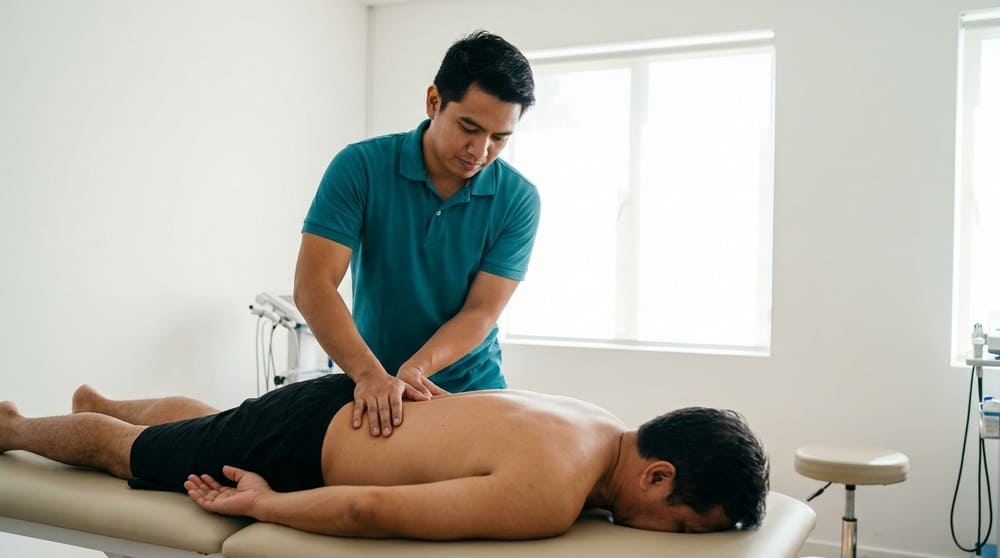
At our clinic, our back pain relief program combines hands-on therapy, graded movement, and the kind of real-life coaching this article previews. Most patients see meaningful change within 4 to 8 sessions.
The mindset shift that changes everything
The patients who recover best are the ones who stop thinking about posture as something they "should" do and start thinking of it as a tool they use when useful. It is not about sitting like a Miss Universe candidate at your desk. It is about distributing the sitting load across more of your day, adding movement where you can, and not letting one bad decade of commuting calcify into a bad knee or hip ten years from now.
And if you are already in pain — chronic or acute — the principles from our chronic pain article apply. Start with understanding the problem, move within comfortable ranges, and reach out when you are stuck.
Back pain not getting better on its own?
Come see us for a free 20-minute assessment. We will check your mechanics, your work-from-home setup (video assessment possible), and map out a realistic plan. HMO-accredited.
Book Assessment Call +63 917 428 6391